Korean Winter Soup
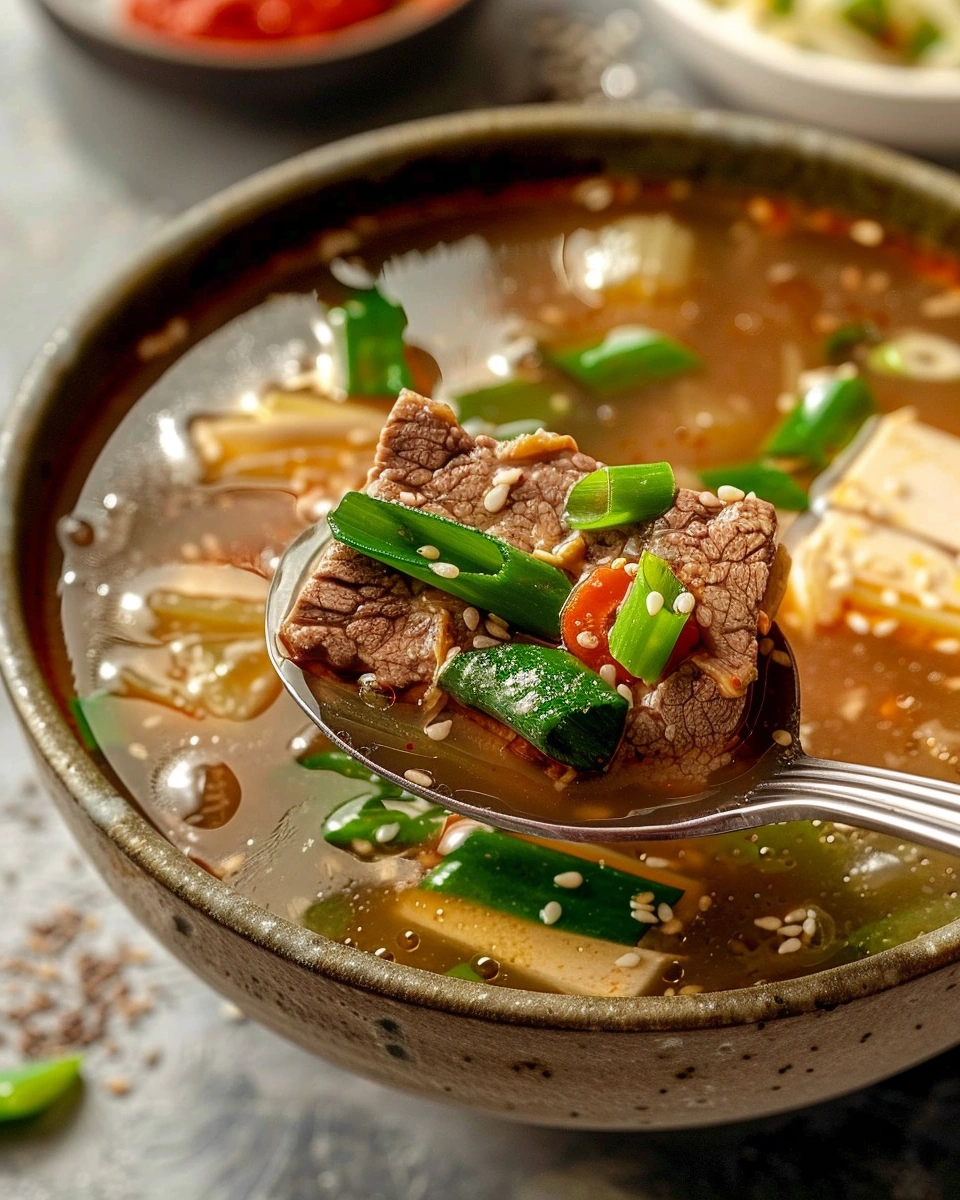
When winter sets in, you want food that does more than just fill you up—you want something warming, soothing, and deeply satisfying. If you’ve ever had soup that tasted flat or didn’t quite warm you through, you know how disappointing that can be on a cold day.
This Korean winter soup is rich, comforting, and packed with cozy flavors that are perfect for cold weather. Inspired by classic Korean home-style soups, it combines a savory broth, tender protein, vegetables, and warming seasonings that feel nourishing with every spoonful.
I’ve made versions of this soup all winter long when I want something comforting but still light enough to enjoy often. In this post, you’ll learn how to build deep flavor step by step, customize it to your spice level, and make it a reliable cold-weather favorite.
Why You’ll Love This Recipe
-
Deeply warming and comforting, perfect for winter
-
Balanced and nourishing, not heavy
-
Easy one-pot recipe
-
Customizable spice level
-
Great for leftovers and meal prep
Ingredients & Prep
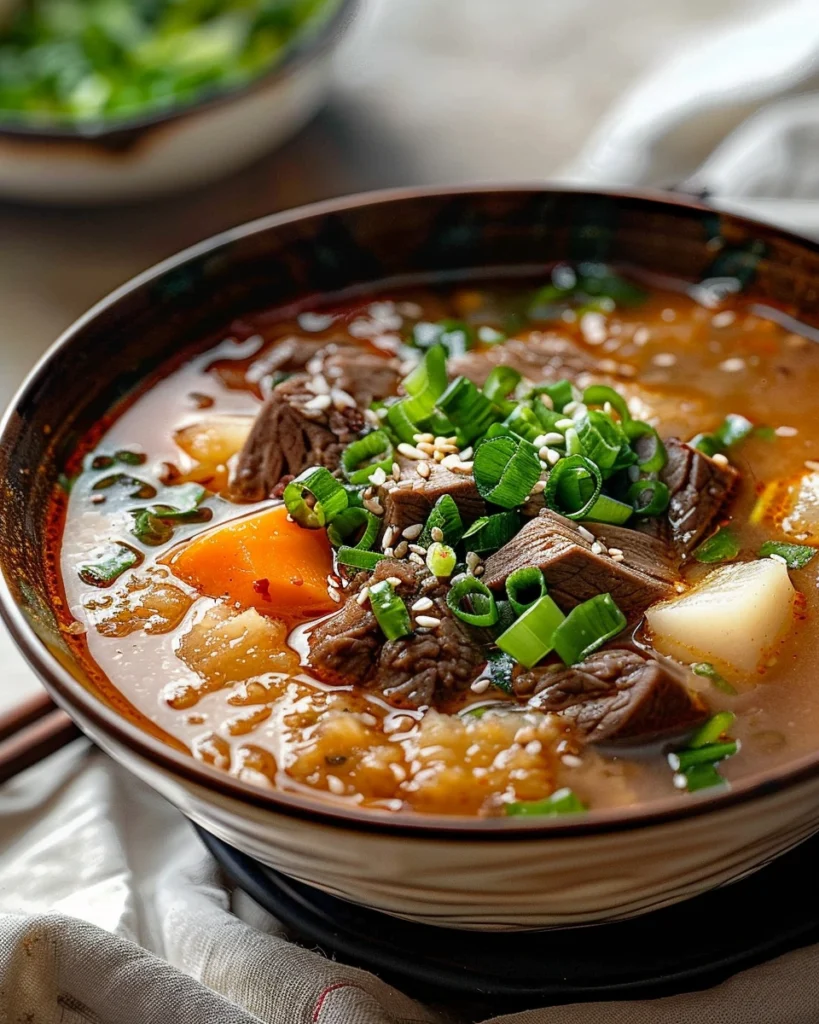
This Korean winter soup uses simple ingredients that come together for bold, comforting flavor.
Main Ingredients Prep
-
Beef or chicken – Thinly sliced beef or bite-sized chicken pieces
-
Tofu – Firm or soft tofu, cubed
-
Zucchini – Sliced into half-moons
-
Onion – Thinly sliced
-
Green onions – Chopped for flavor and garnish
Seasonings, Sauces, or Flavor Base
-
Gochujang – Adds warmth, depth, and gentle heat
-
Soy sauce – Savory base flavor
-
Garlic – Fresh minced garlic is essential
-
Sesame oil – Adds richness and aroma
-
Gochugaru (optional) – For extra heat
Pantry Staples
-
Neutral oil – For sautéing
-
Beef or anchovy broth – Traditional and flavorful
-
Salt and black pepper – Adjust to taste
-
Sugar – Just a pinch to balance heat
Step-by-Step Cooking Instructions
This Korean winter soup comes together smoothly in one pot.
Pre-Cooking Prep
-
Slice protein into bite-sized pieces.
-
Chop vegetables and cube tofu.
-
Measure out seasonings so they’re ready to go.
Cooking Method
-
Heat neutral oil in a large pot over medium heat.
-
Add garlic and onion and sauté 2–3 minutes until fragrant.
-
Stir in gochujang and sesame oil. Cook 1 minute to deepen flavor.
-
Add protein and cook until lightly browned.
-
Pour in broth and bring to a gentle boil.
-
Reduce heat and simmer 10–15 minutes.
-
Add zucchini and tofu.
-
Simmer another 5–7 minutes until vegetables are tender.
-
Stir in soy sauce, a pinch of sugar, and gochugaru if using.
Doneness or Texture Check
-
Protein fully cooked and tender
-
Broth rich, savory, and lightly spicy
-
Vegetables soft but not mushy
Resting or Final Touches
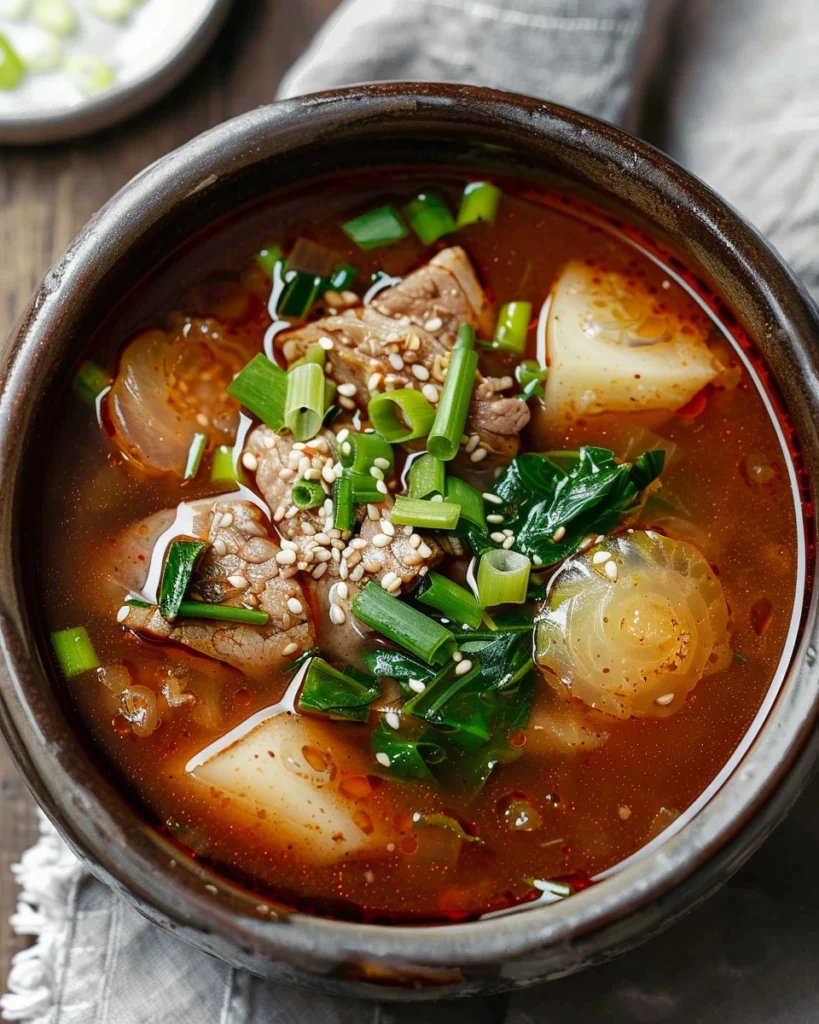
Turn off heat and let the soup rest for 5 minutes. Stir in green onions and adjust seasoning before serving.
Pro Tips for Perfect Results
Common Mistakes to Avoid
-
Boiling too aggressively – Can make protein tough
-
Overloading gochujang early – Add gradually and taste
-
Skipping sesame oil – It adds signature warmth
Recommended Tools
-
Large soup pot
-
Sharp knife and cutting board
-
Ladle
Storage & Reheating Tips
-
Store leftovers in an airtight container up to 3 days
-
Reheat gently on the stovetop
-
Add a splash of broth if thickened
Flavor Variations
This Korean winter soup is easy to adapt.
Spicy Version
-
Add more gochugaru
-
Stir in chili oil
-
Use spicy gochujang
Healthy / Special Diet Option
-
Use lean chicken breast
-
Add mushrooms or spinach
-
Use low-sodium soy sauce
-
Make it gluten-free with tamari
Global Flavor Twist
-
Seafood-style: Add shrimp or clams
-
Vegetarian: Skip meat and add mushrooms and extra tofu
-
Extra comforting: Add rice cakes or glass noodles
Serving Suggestions
This soup is best enjoyed simply.
Side dishes
-
Steamed white rice
-
Kimchi or pickled vegetables
-
Simple cucumber salad
Drinks, sauces, or toppings
-
Extra green onions
-
Sesame seeds
-
Chili oil
FAQs
Can I make this ahead of time?
Yes. This soup tastes even better the next day as the flavors deepen. Reheat gently before serving.
How do I fix common mistakes?
-
Too spicy: Add more broth or tofu
-
Too mild: Add gochujang or chili flakes
-
Too salty: Add water or unsalted broth
Conclusion
This Korean winter soup is warm, nourishing, and deeply comforting—exactly what you want when the weather turns cold. It’s easy to make, flexible, and full of bold flavor without being heavy.
Save this recipe for cold nights, share it with anyone who loves cozy soups, and if you enjoy warming bowls like this, try Korean soybean paste soup or spicy soft tofu stew next. There’s nothing better than a steaming bowl of comfort in winter.
Korean Winter Soup
SarahIngredients
- Soup Base
- 1 tablespoon neutral oil canola or vegetable
- 1 small onion thinly sliced
- 4 cloves garlic minced
- 1 tablespoon gochujang Korean chili paste, more to taste
- 1 teaspoon sesame oil
- Protein & Vegetables
- ¾ lb thinly sliced beef or bite-sized chicken pieces
- 1 small zucchini sliced into half-moons
- 7 –10 oz tofu firm or soft, cubed
- 2 green onions chopped
- Broth & Seasoning
- 5 –6 cups beef broth or anchovy broth
- 1½ tablespoons soy sauce or tamari
- ½ –1 teaspoon gochugaru optional, for heat
- ½ teaspoon salt adjust to taste
- ¼ teaspoon black pepper
- ½ teaspoon sugar optional, to balance heat
Instructions
- Heat neutral oil in a large pot over medium heat.
- Add onion and garlic and sauté 2–3 minutes until fragrant and softened.
- Stir in gochujang and sesame oil. Cook 1 minute to deepen flavor.
- Add beef or chicken and cook until lightly browned.
- Pour in broth and bring to a gentle boil.
- Reduce heat and simmer for 10–15 minutes.
- Add zucchini and tofu.
- Simmer another 5–7 minutes until vegetables are tender.
- Stir in soy sauce, gochugaru (if using), sugar, salt, and black pepper.
- Remove from heat and let rest 5 minutes.
- Stir in green onions before serving.
Notes
- Add gochujang gradually—heat levels vary by brand.
- Gentle simmering keeps the broth clear and protein tender.
- Sesame oil at the end enhances aroma and warmth.